

The Challenges of Countering Emerging Drone Threats
October 13, 2026
Uncrewed aerial systems (UAS), commonly known as drones, have developed rapidly in recent years. Advances in communications, sensors, navigation, automation and commercially available components have expanded the range of capabilities that UAS can provide.
For defence organisations, these developments create an ongoing requirement to assess how effectively existing security and counter-UAS (C-UAS) capabilities can detect, identify and respond to different types of aerial activity.
Countering emerging drone threats is not simply a matter of acquiring new technology. Defence organisations must consider technical limitations, complex operating environments, changing requirements, regulatory considerations and the need to integrate C-UAS capabilities with existing defence systems.
An Increasingly Diverse UAS Environment
One of the key challenges is the diversity of UAS now available. Systems vary considerably in size, design, communications technology, flight characteristics and intended purpose.
This creates challenges for detection and identification because a C-UAS capability needs to operate across a range of potential scenarios rather than against a single type of platform.
Developments in commercially available technology can also occur relatively quickly. This means that defence organisations need to continually assess whether existing detection and mitigation capabilities remain appropriate as UAS technology changes.
Detecting Small and Low-Signature Systems
Detection is one of the fundamental challenges in countering UAS. Smaller systems can present different detection characteristics from conventional aircraft, particularly when operating in environments containing buildings, vegetation or other sources of background activity.
Individual detection technologies can also have limitations. Radar, radio-frequency sensors and electro-optical or infrared systems each provide different types of information and may perform differently depending on environmental conditions.
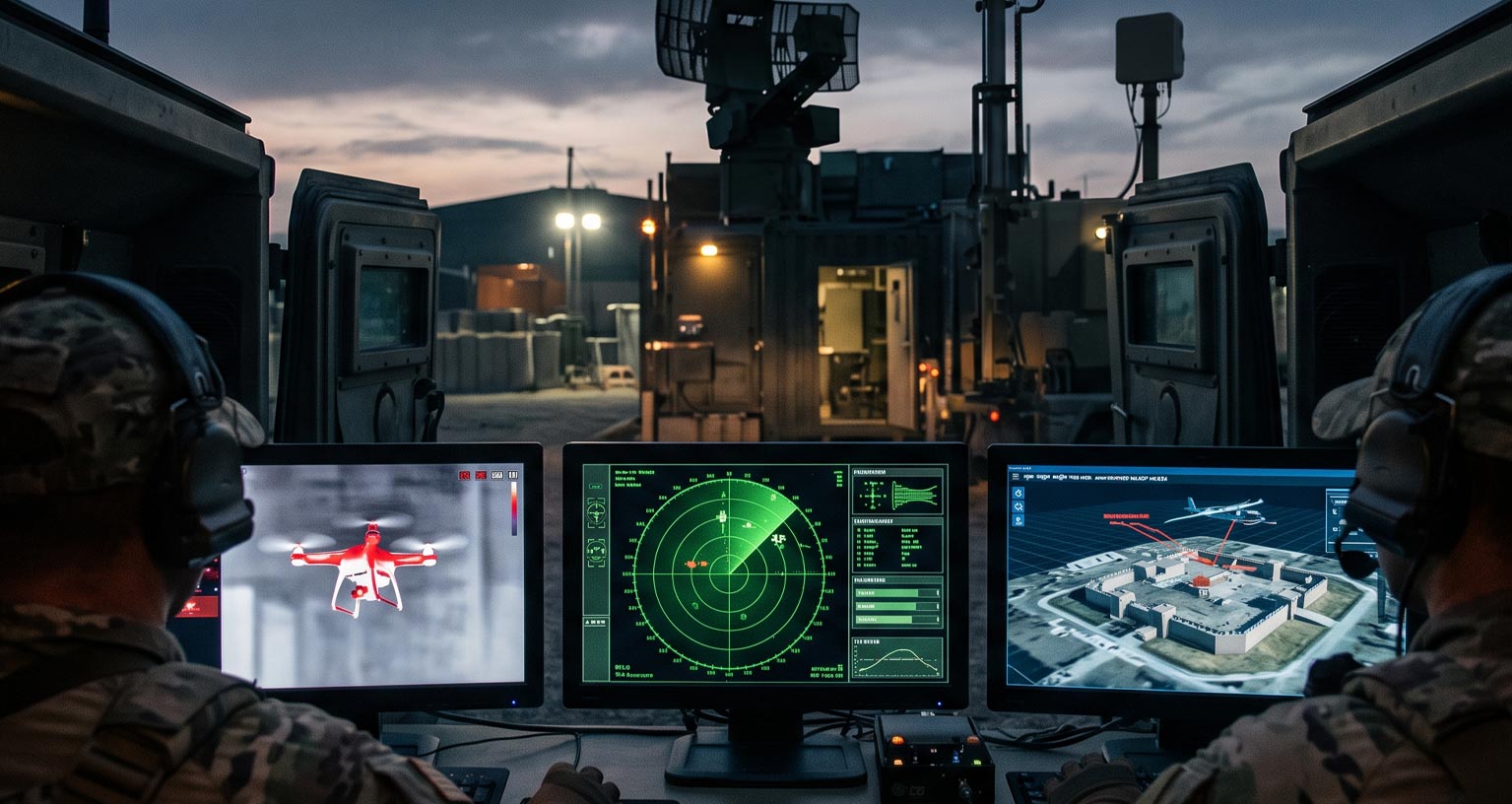
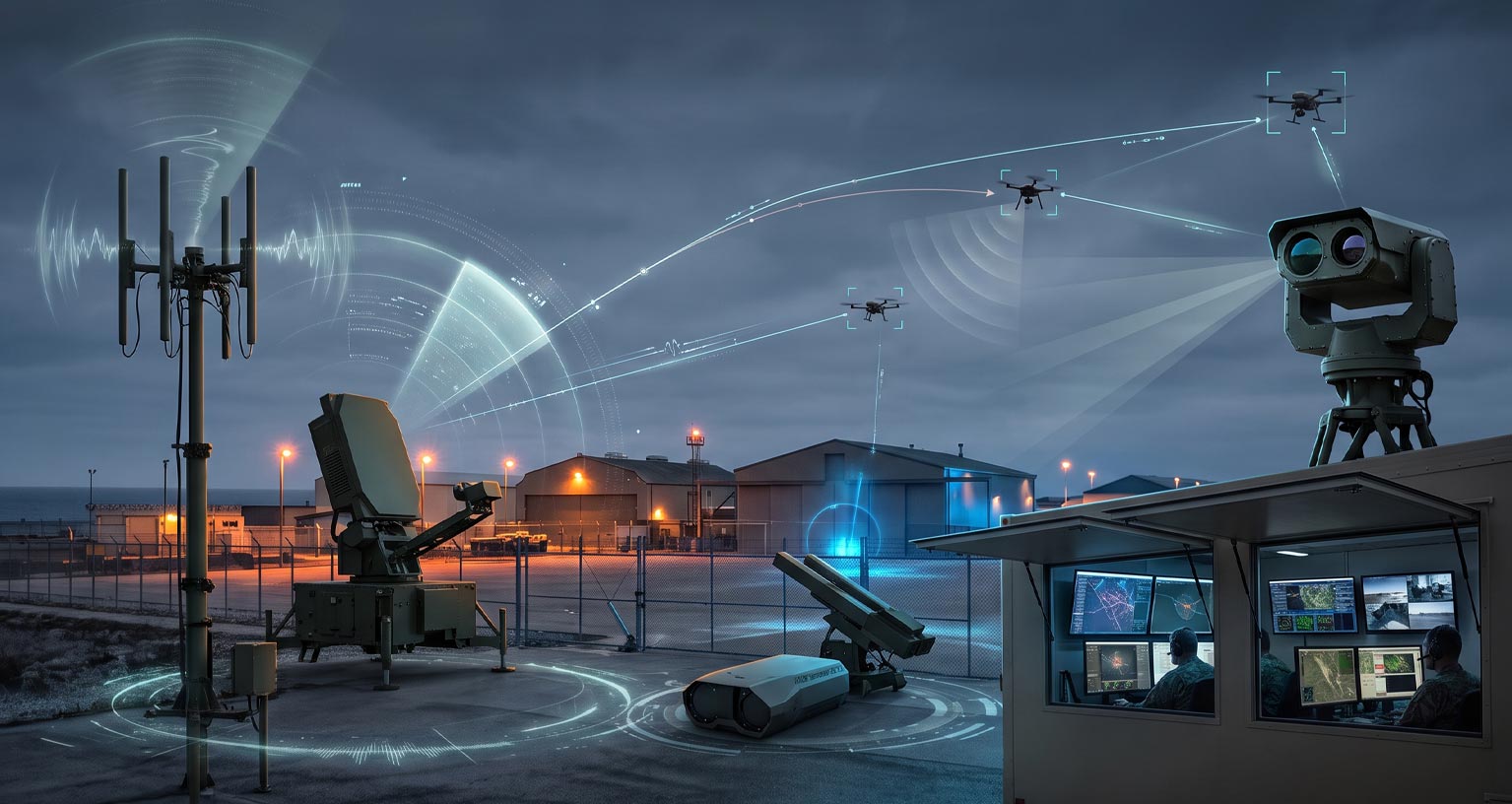
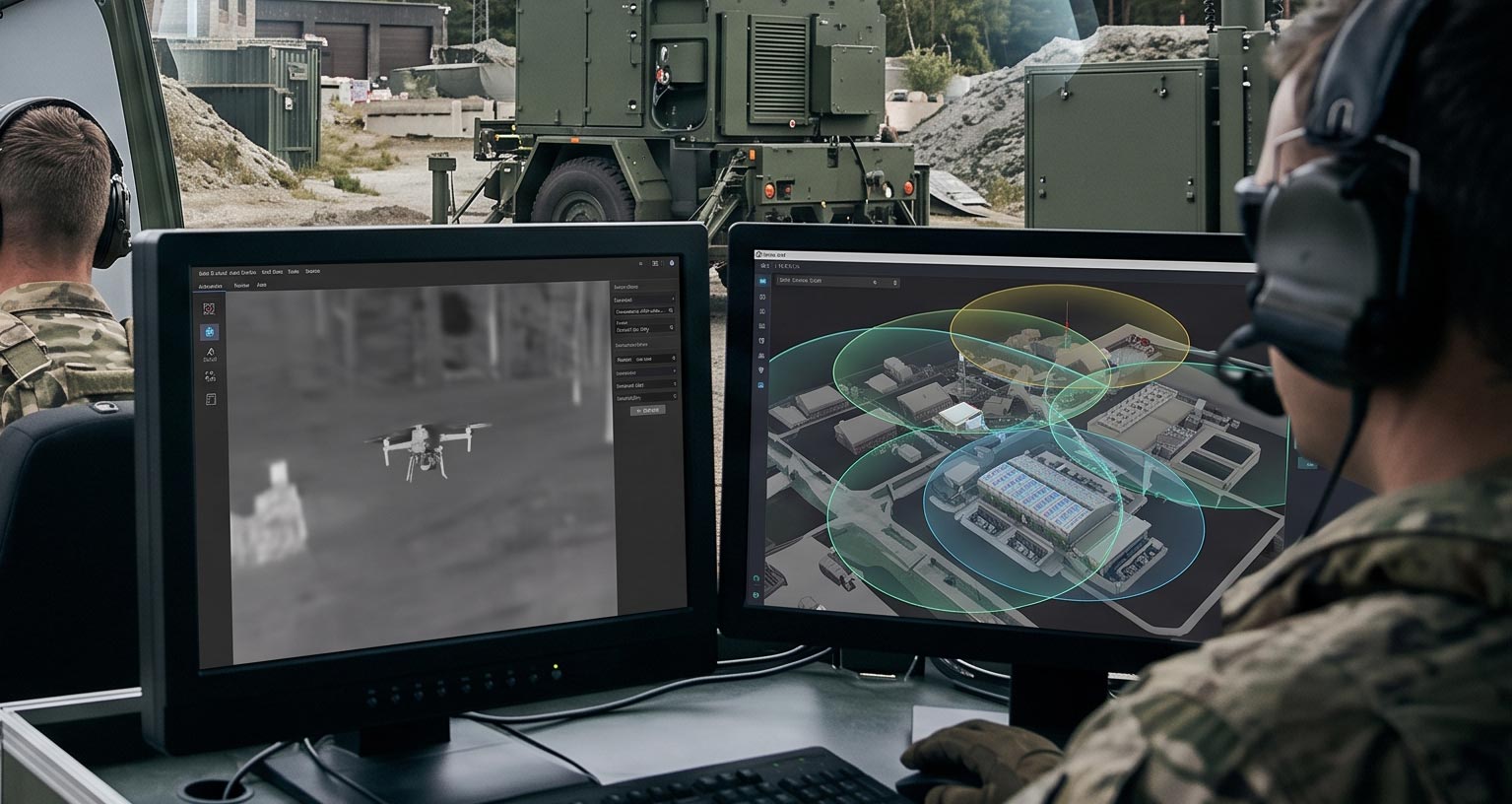
For this reason, modern C-UAS approaches often consider multiple sensors and data sources together. Combining information from different technologies can help provide a more comprehensive understanding of activity within a protected area.
Distinguishing Legitimate and Unauthorised Activity
Not every drone operating near a defence facility necessarily represents a hostile threat. Security teams may need to distinguish between authorised activity, legitimate aircraft and potentially unauthorised UAS operations.
Accurate identification is therefore an important part of the C-UAS process.
False detections or incorrect classifications can create unnecessary demands on personnel and resources, while failing to recognise potentially significant activity can present its own risks. Effective systems therefore need to provide reliable information that supports proportionate and informed decision-making.
Operating in Complex Environments
The environment in which a C-UAS system operates can have a significant impact on its performance.
Military facilities and other protected locations may contain buildings, vehicles, communications infrastructure and other sources of electromagnetic or visual interference. Weather and terrain can also affect individual sensors.
These factors make it difficult to assess C-UAS performance using a single measure. Defence organisations need to consider how a capability performs within the specific environment in which it is expected to operate.
Testing and evaluation under representative conditions can therefore be an important part of procurement and capability development.
Keeping Pace With Changing Technology
UAS technology continues to evolve, creating a corresponding challenge for C-UAS development.
Changes in communications, navigation, autonomy and onboard sensing can affect how drones behave and how they can be detected. Technologies that are effective against one type of UAS may not necessarily provide the same level of capability against another.
This creates a requirement for adaptable C-UAS architectures. Upgradeable software, modular systems and the ability to incorporate additional sensors or capabilities can help organisations respond to changing requirements over time.
Integrating Multiple Technologies
Modern C-UAS systems commonly combine several technologies, including radar, radio-frequency detection, electro-optical and infrared sensors, command-and-control systems and mitigation capabilities.
Integrating these technologies effectively can be challenging. Different systems may have different data formats, interfaces and technical requirements.
Interoperability is therefore an important consideration during procurement. A new C-UAS capability may need to exchange information with existing surveillance, communications and command systems rather than operating independently.
Effective integration can help turn information from individual sensors into a more useful overall picture for authorised operators.
Managing Electronic and Cybersecurity Considerations
Many modern UAS rely on electronic communications and digital systems. As a result, C-UAS capabilities must take account of the wider electromagnetic and cybersecurity environment.
Electronic mitigation technologies can potentially affect other systems operating within the same environment, making careful assessment and control important. C-UAS systems themselves must also be appropriately protected against cyber threats.
Cybersecurity should therefore be considered throughout the procurement and lifecycle of a C-UAS capability, including system design, software updates, network integration and ongoing maintenance.
Balancing Rapid Response With Governance
Defence organisations may need to respond quickly when unauthorised aerial activity is detected. However, any response capability must operate within the relevant legal, regulatory and operational framework.
This creates a balance between responsiveness and appropriate governance. Clear procedures, trained personnel and reliable information can help ensure that decisions are made consistently and proportionately.
The appropriate response will depend on the circumstances, the nature of the activity and the environment in which it occurs. There is therefore no universal response that can be applied to every UAS incident.
Managing Cost and Capability
Developing a comprehensive C-UAS capability can involve significant investment. Defence organisations must balance the need for effective protection with available resources and other competing capability priorities.
This makes requirements-led procurement particularly important. Rather than selecting technology based solely on specifications or technological novelty, organisations need to assess how a proposed capability addresses the risks and operational requirements of the specific environment.
Whole-life considerations are also important, including training, maintenance, software updates, infrastructure requirements and future upgrades.
The Importance of Continuous Evaluation
The rapidly changing nature of UAS technology means that C-UAS cannot necessarily be treated as a capability that is acquired once and then left unchanged.
Continuous assessment can help organisations understand how emerging technologies affect existing security arrangements and identify where additional capability may be required.
This can include reviewing sensor performance, evaluating new technologies, monitoring changes in the UAS landscape and conducting appropriate testing and exercises.
Continuous evaluation also supports better long-term procurement decisions by helping defence organisations understand where investment can provide the greatest operational benefit.
Conclusion
Emerging drone technologies present a complex challenge for defence organisations. The diversity of UAS, difficulties associated with detecting smaller systems, complex operating environments and rapid technological development all create challenges for effective counter-UAS planning.
Addressing these challenges requires more than a single technological solution. Effective C-UAS capabilities depend on the integration of appropriate sensors, reliable identification and tracking, suitable mitigation options, robust command and control, cybersecurity and well-defined operational procedures.
As the UAS landscape continues to evolve, defence organisations will need to maintain a flexible and evidence-based approach to C-UAS procurement and capability development. Continuous evaluation, interoperability and lifecycle planning can help ensure that protective measures remain appropriate as both drone technology and operational requirements change.